


It may feel like it started overnight. Your once agile puppy seems to wake up one morning and not really be able to go up the stairs, get on the couch, or jump in the car. Sometimes the early signs of arthritis can be as subtle as not being able to go for the long walks they once enjoyed. If you have noticed one or more of these signs, your dog may have arthritis.
The signs in cats are not as obvious since they are very good at hiding pain. You may notice subtle changes like your cat is no longer jumping on things he once did or it may be more obvious like your cat is now limping or his walk seems different. He may even be hiding more.

If you notice any of these signs in your pet you should first discuss it with your veterinarian. Your veterinarian will check your pet over and may check your pet’s range of motion in his legs, palpate for neck and back pain, and possibly recommend x-rays. If you and your veterinarian determine your pet has arthritis a treatment plan can then be made. There are different ways to treat arthritis and which treatment you chose will depend on your pet, what you feel comfortable with, and what your veterinarian thinks will help your pet the most.
Treatment Options For Your Pet
Some treatment options that are available include omega-three fatty acids, glucosamine and chondroitin, non-steroidal anti-inflammatory (NSAID) pain medication, acupuncture, and Adequan. Below are some of the most common treatment options used. This list is not all-inclusive and you should discuss with your veterinarian which options are best for your pet.
- Non-steroidal anti-inflammatory medications (NSAIDs) are fast-acting medications that are good at decreasing inflammation quickly. This family of medications acts quickly by suppressing the inflammatory biochemicals that ultimately lead not only to the pain of arthritis but also to cartilage damage. These medications also require monitoring since they can have negative effects on the liver and kidneys in some pets. This being said, most dogs tolerate this family of medications well when used appropriately. Your veterinarian can guide you on the proper dose and monitoring. This option is available for cats and dogs however, you have to be careful of the source and processing for it to be effective and safe
- Adequan has an injectable cartilage component called polysulfated glycosaminoglycan. Adequan has numerous beneficial effects for the arthritis patient including the inhibition of harmful enzymes involving joint cartilage destruction, stimulation of cartilage repair, and increasing joint lubrication. It works by giving an injection to your pet and has the ability to go to all of your pet’s joints. Usually, a series of eight injections over the course of four weeks is given, and then it’s used on an as-needed basis after that (Typically once monthly).
- Joint diets are typically high in fatty acids and have glucosamine and chondroitin in them. They can be used in animals that may be prone to arthritis or joint issues such as very active dogs. They can also be used in conjunction with pain medications and other treatment options. There are several choices available. Ask your veterinarian which one is best for your pet.
- Omega-three fatty acids have anti-inflammatory properties. It is safe to be given to both dogs and cats and is often needed at much higher doses than what humans normally take. However, you have to be careful of the source and processing for it to be effective and safe.
- Glucosamine and chondroitin are found in many over-the-counter joint supplements. Both glucosamine and chondroitin make up cartilage and are believed to help repair cartilage when taken orally. When using these supplements it can take several months to see an improvement. This option is also available for both cats and dogs.
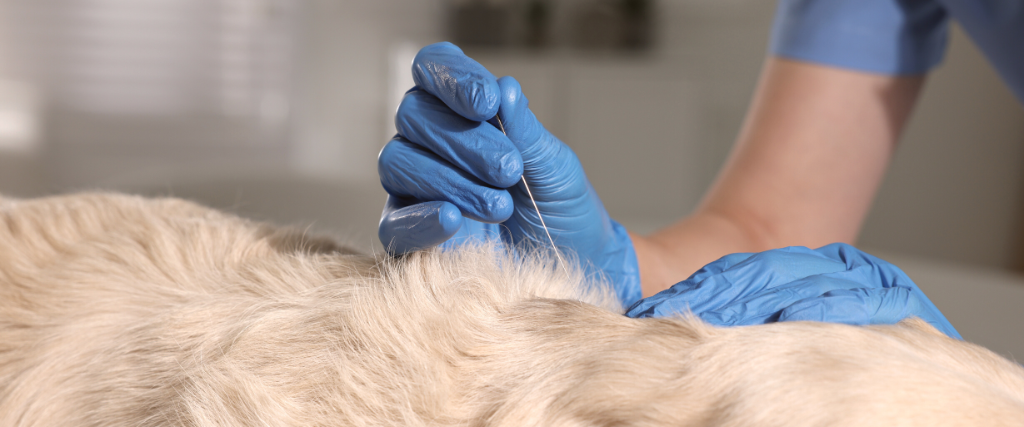
- Acupuncture is another pain management option. The goal of acupuncture is to bring pain relief to your pet by placing acupuncture needles at specific points. The success rate depends on the individual animal and to some degree the duration and severity of the arthritis. It can be used alone or in combination with one of the treatment options mentioned above.
There are different variations of this modality, such as cold laser therapy, myofascial message, and other types of supplements. (HA, Green-lipped muscle,...) There is no one-size-fits-all when it comes to pain management in your pet. Discuss with your veterinarian which option is best for your pet.